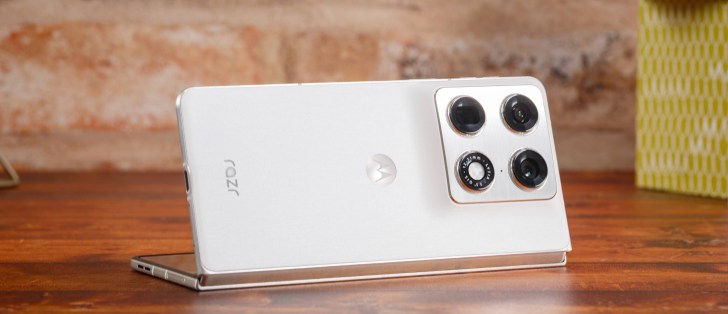
Motorola Signature triple setup on the back of the Razr Fold
The Razr Fold is practically a foldable Motorola Signature when it comes to its cameras – the entire triple setup on the back has been lifted from the company’s non-bendy flagship. The Signature’s selfie camera didn’t make the cut though, its 50 megapixels roughly split into two modules on the Fold (20MP on the cover, 32MP inside).
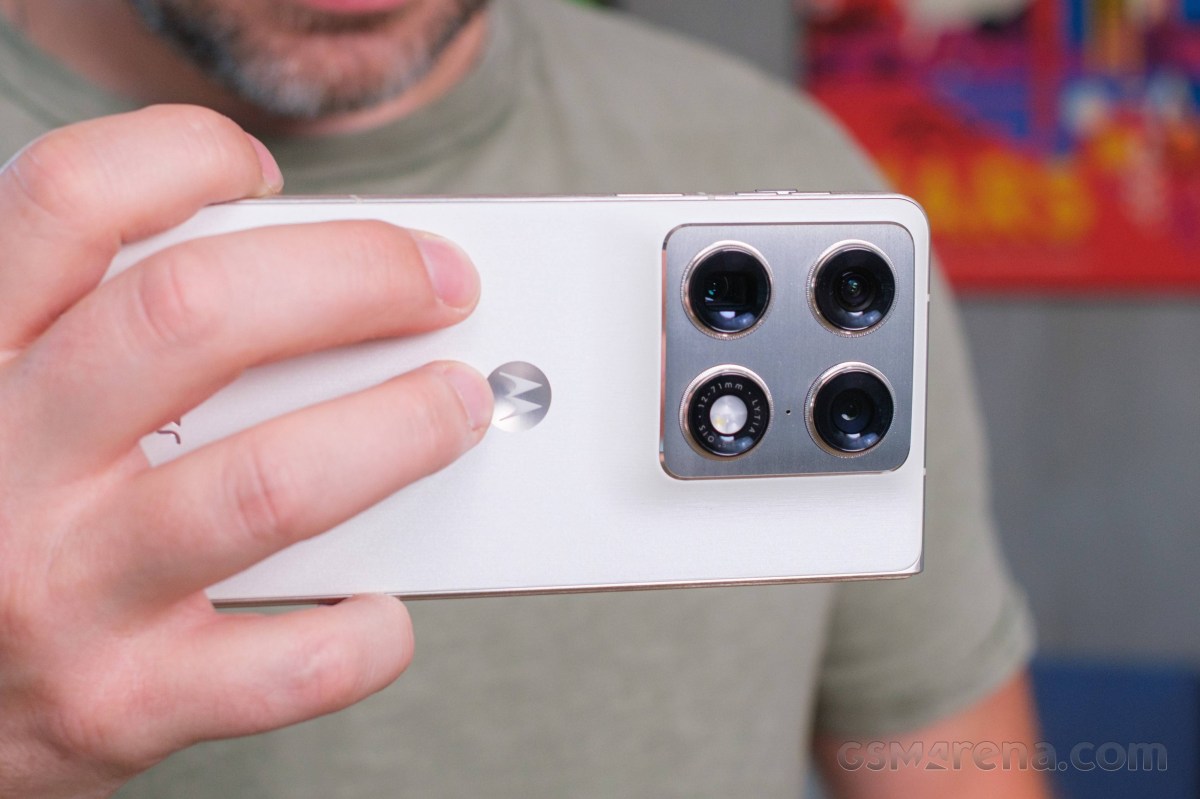
On the back, you’d be getting a main camera with the largest sensor on a book-style foldable – a 1/1.28″ Sony unit. It’s paired with a stabilized 24mm-equivalent lens (as per the EXIF, though the official specs’ field of view suggests 23-ish mm) with an f/1.6 aperture – a proper high-end combo.
The telephoto camera uses another Sony imager, a 1/1.95″ one. The 71mm lens is stabilized and allows for close focusing.
Then there’s the ultrawide, which in typical Moto fashion is wider than most with its 12mm-equivalent lens that is also AF-capable. Its 50MP sensor is the Samsung JNS, what we gather is a variant of the JN1/JN5 breed.
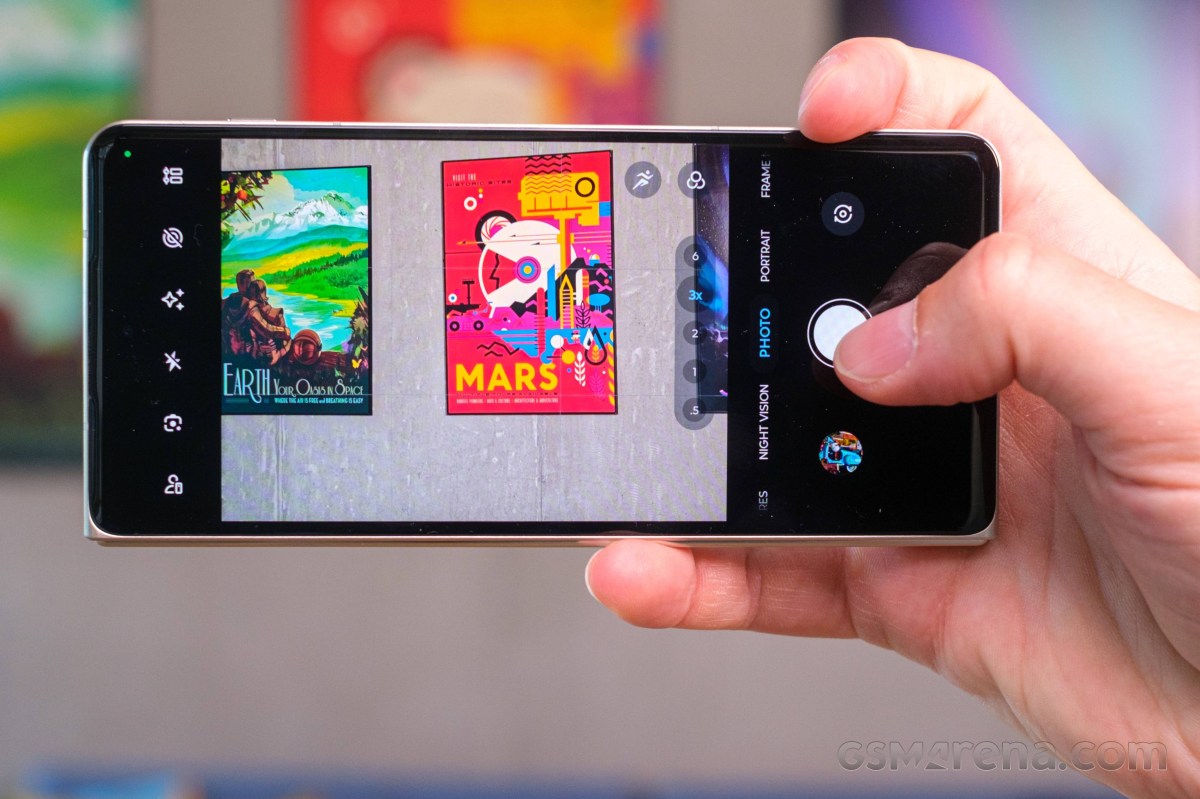
Then there are the two selfie cameras, a modest 20MP unit on the cover (that will likely motivate you to use the rear cameras for your selfies more often than not), and a slightly more capable 32MP one on the inside.
- Wide (main): 50MP Sony IMX 09A (Lytia 828, 1/1.28″, 1.22µm-2.44µm); 23/24mm, f/1.6, OIS, multi-directional PDAF; 8K30/4K60 video recording.
- Telephoto: 50MP Sony IMX 882 (Lytia 600, 1/1.95″, 0.8µm-1.6µm); 71mm, f/2.4, OIS, multi-directional PDAF; 8K30/4K60.
- Ultrawide: 50MP Samsung ISOCELL JNS (S5KJNS, 1/2.76″, 0.64µm-1.28µm); 12mm, f/2.0, PDAF; 4K60.
- Cover: 20MP OmniVision OV32D (1/3.6″, 0.61µm-1.22µm); 21mm, f/2.4, fixed focus; 1080p60.
- Internal: 32MP Samsung ISOCELL KDS (S5KKDS/S5KKD1, 1/3.42″, 0.64µm-1.28µm); 22mm, f/2.4, fixed focus; 4K60.
Daylight photo quality
Main camera
There’s a lot to like and little to complain about with the Razr Fold’s main camera photos in broad daylight. The photos have a lot of presence, their great contrast and vibrant colors making them very appealing to a broad audience. Dynamic range is nice and wide, the white balance is accurate, detail is very good and reasonably naturally rendered.








Daylight samples, main camera (1x)
Portraits at 1x are also pretty great, with a bit of separation in Photo mode already and a measured bokeh effect in Portrait mode. Skin tones are lively and mostly accurate save for a faint pinkish tint in bright sunlight.








Human subjects, main camera: Photo mode, 1x • Portrait mode, 24mm
We’re not really seeing any extra detail in the 50MP shots – just aggressive sharpening and some three times the file sizes.




Daylight samples, main camera (1x), 50MP
You can expect some good quality shots at 2x in 12.5MP though – the Razr Fold does well in terms of sharpness and detail rendition, even if it may not be the best implementation of 2x zoom from a wide main camera.








Daylight samples, main camera (2x)
Portraits at 2x aren’t pin-sharp as well, but they’re not bad either and for this use case you’d probably be fine with less than perfect detail.
That sort of extends to the portraits too. Detail is good and the 2x/50mm focal length works well for tighter framing. In Portrait mode, there’s also a 35mm zoom preset and its shots are quite good az well.












Human subjects, main camera: Photo mode, 2x • Portrait mode, 35mm • Portrait mode, 50mm
Telephoto camera
The telephoto camera captures great photos as well, even if its global properties are a little different than those on the main camera – colors are a little less saturated, contrast is a bit higher. It’s still a very appealing look, just not quite the same. Detail is very good again.












Daylight samples, telephoto camera (3x)
Photos of people at 3x are excellent as well. The focal length is very well suited to head-and-shoulders type framing and you’ll be getting pleasing perspective and facial proportions, plus a bit of optical background blur. Skin tones are easy to like too. Portrait mode doesn’t do 71mm, but it will do 85mm and quality is virtually the same, only the frame is a little tighter.








Human subjects, telephoto camera: Photo mode, 3x • Portrait mode, 85mm
Here’s the usual set of full-res shots to illustrate that there isn’t much use in shooting in 50MP.




Daylight samples, telephoto camera (3x), 50MP
The 6x zoom photos, on the other hand, are quite alright – they do have a somewhat digital detail rendition with too liberal sharpening, though there’s still plenty of detail. The white balance showed some greenish leanings that the same scenes in 3x didn’t get, but it’s not too bad and colors are generally pleasing after all.











Daylight samples, telephoto camera (6x)
Ultrawide camera
The ultrawide camera’s lens is wider than most, yet it manages to capture sharp and detailed photos – you rarely get this good output from even less extreme focal lengths and it’s probably all the more impressive that you’re getting this on a foldable. Indeed, detail is excellent for an ultrawide camera, dynamic range is wide, colors are looking great. The lack of a 50MP mode isn’t really an issue.








Daylight samples, ultrawide camera (0.5x)
Close-ups
You can get some nice closeups with the Razr Fold, and you can do it at a number of focal lengths with various tradeoffs between reproduction, pixel-level quality, subject distance, and perspective.
Perhaps the best all-around mode is 3x – the telephoto’s native focal length will get you great detail, reasonable shooting distance (minimum focusing distance is around 14cm), and little to no distortion.




Close-up samples, telephoto camera (3x)
You can choose to sacrifice some pixel-level sharpness to gain larger reproduction and shoot at 6x – it could be a very reasonable compromise given the right circumstances.




Close-up samples, telephoto camera (6x)
The 2x from the main camera is another viable option.




Close-up samples, main camera (2x)
Then there’s the ultrawide camera, which will get you up into your subject with its close focusing, possibly disturbing it if it’s a living thing, and certainly posing issues with lighting and shadows. Still, the wonky perspective of the extremely wide lens might be worth trying to work around the challenges.




Close-up samples, ultrawide camera (0.5x)
Low-light photo quality
Main camera
The Razr Fold will also get you very good low-light results with its main camera at 1x. Exposures are well judged and dynamic range is very good, so you can expect well developed shadows and reasonably contained highlights. The auto white balance deals well with odd lighting setting an accurate baseline, and colors are quite pleasing overall. Detail is good, but a bit coarsely rendered – we’ve seen random textures and fine lines rendered better, maybe even from foldables.








Low-light samples, main camera (1x)
The 2x zoom results, as in most other such instances, aren’t too great, with heavy sharpening, some jaggies, and a general softness. Still, they’re not the worst 2x photos we’ve seen, and they just might be above average as book-style foldables go.








Low-light samples, main camera (2x)
Telephoto camera
The telephoto camera is unfazed by the dark as well. Dynamic range is very good and we’re looking at nicely balanced exposures. The white balance is generally dependable as well, but there might be a bit less saturation than we’d like. Detail is good overall, though the Honor Magic V6 may still be superior.








Low-light samples, telephoto camera (3x)
At 6x zoom, the Razr Fold will get you decent photos, but it’s again bested by that one key rival, possibly more noticeably so than at 3x.




Low-light samples, telephoto camera (6x)
Ultrawide camera
The ultrawide isn’t as impressive at night as it is during the day, though it does still maintain a solid level. Global properties remain excellent, with dynamic range and colors leaving no grounds for complaint. Detail is a bit lacking though, particularly in the shadows.








Low-light samples, ultrawide camera (0.5x)
Selfies
The Razr Fold doesn’t have the Signature’s top-class selfie camera, but it’s a different breed of smartphone and it doesn’t really need it. The internal camera is still a pretty good performer, taking quite solid 8MP stills in both good light and at night. The cover camera’s results are also surprisingly good in most metrics, though 5MP is obviously not a lot of pixels.






Selfie samples, internal camera






Selfie samples, cover camera
For ‘critical’ selfie taking, you’ll naturally be best off opening the Razr Fold and using the rear cameras with the cover screen as the viewfinder. The main camera will get you properly excellent images with great detail and plenty of background blur, and it will also take your low-light selfies to a different level. Then there’s the ultrawide – for capturing a ton of your surroundings or exploring weird perspectives.






Selfie samples, main camera (1x)






Selfie samples, ultrawide camera (0.5x)
Photo quality verdict
The Motorola Razr Fold does an excellent job as a stills camera in the large foldables space – even more so than the Motorola Signature (which it shares most of its cameras with) does in its own context. The large-sensor main camera is hard to fault at its native focal length regardless of what you throw at it, and it does alright at 2x, the ultrawide is particularly impressive during the day and mostly fine at night, and the telephoto is great in daytime, still solid after dark. Rear camera selfies are predictably excellent, and even the unremarkably-specced in-display selfie cameras aren’t exactly bad.
Video quality
All three of the Razr Fold’s rear cameras can record video up to 4K60, and the main camera and the telephoto can also do 8K30 capture. The internal selfie camera is also capable of 4K60, while the cover camera maxes out at 1080p60. There’s no 24fps setting for any resolution, and there’s no Pro video mode to be found either.
Dolby Vision recording is available in all quality settings other than 8K30. There’s an always-on video stabilization in all resolution/frame rate combos, plus the ‘Horizon lock’ stabilization that limits you to 1080p30 on the ultrawide.
You can hit ‘> play’ below and use the ‘>| next’ button to advance through the playlist of all video samples, or you can watch the full playlist on YouTube.
https://www.youtube.com/watch?v=videoseries
We had some complaints about the Signature’s high contrast in video, on the main and the telephoto cameras, and it’s a bit more of the same on the Razr Fold, though it’s probably not quite to the same extent (and if you’re the Motorola engineer in charge of video processing and know that it’s entirely identical, drop us a comment, please). As was the case on the non-bendy model, the ultrawide’s contrast setting isn’t as extreme. Colors are great on all three, and the main and telephoto are nicely matched, while the ultrawide’s lower contrast makes it look more washed out in terms of color too.
Detail is, in a single word, good on all three cameras, and if you consider the foldable alternatives only, a ‘very good’ may be in order. The telephoto is a bit more heavily sharpened than what we saw on the Signature (this one we’d be willing to argue, though it could have changed since review time), the main camera is looking more natural in its rendition, and the ultrawide, while not exactly stellar, is still quite sharp given the class and considering how extreme the lens is.





Video screengrabs, daylight: 0.5x • 1x • 2x • 3x • 6x
In the dark, the higher-than-ideal contrast is robbing the main camera of some points, though footage is still well developed tonally. Detail is very good for the segment too. The telephoto is alright in terms of detail – nothing too impressive, but not unusable either. The ultrawide is the hardest to like of the three, with harsh highlights and relative softness throughout with moving object particularly blurry.





Video screengrabs, low light: 0.5x • 1x • 2x • 3x • 6x
Video stabilization is top-class. Walking shake on the main camera is ironed out nicely, with no jelloing. The main camera and the ultrawide are super-stable when shooting from a stationary position, and the telephoto is also great in its own context. Panning is generally smooth too.
Video quality verdict
We were somewhat critical of the Signature’s video performance, but the Razr Fold’s different perspective makes its flaws less problematic. Indeed, as foldables go, the Razr Fold’s footage is among the better ones. The excellent stabilization is a solid foundation, and from then on you have very good quality clips from the main and telephoto cameras in daylight and also good, if a little different, ultrawide results. Low-light quality is also pretty good on the main and the telephoto, though the ultrawide does suffer in the dark.