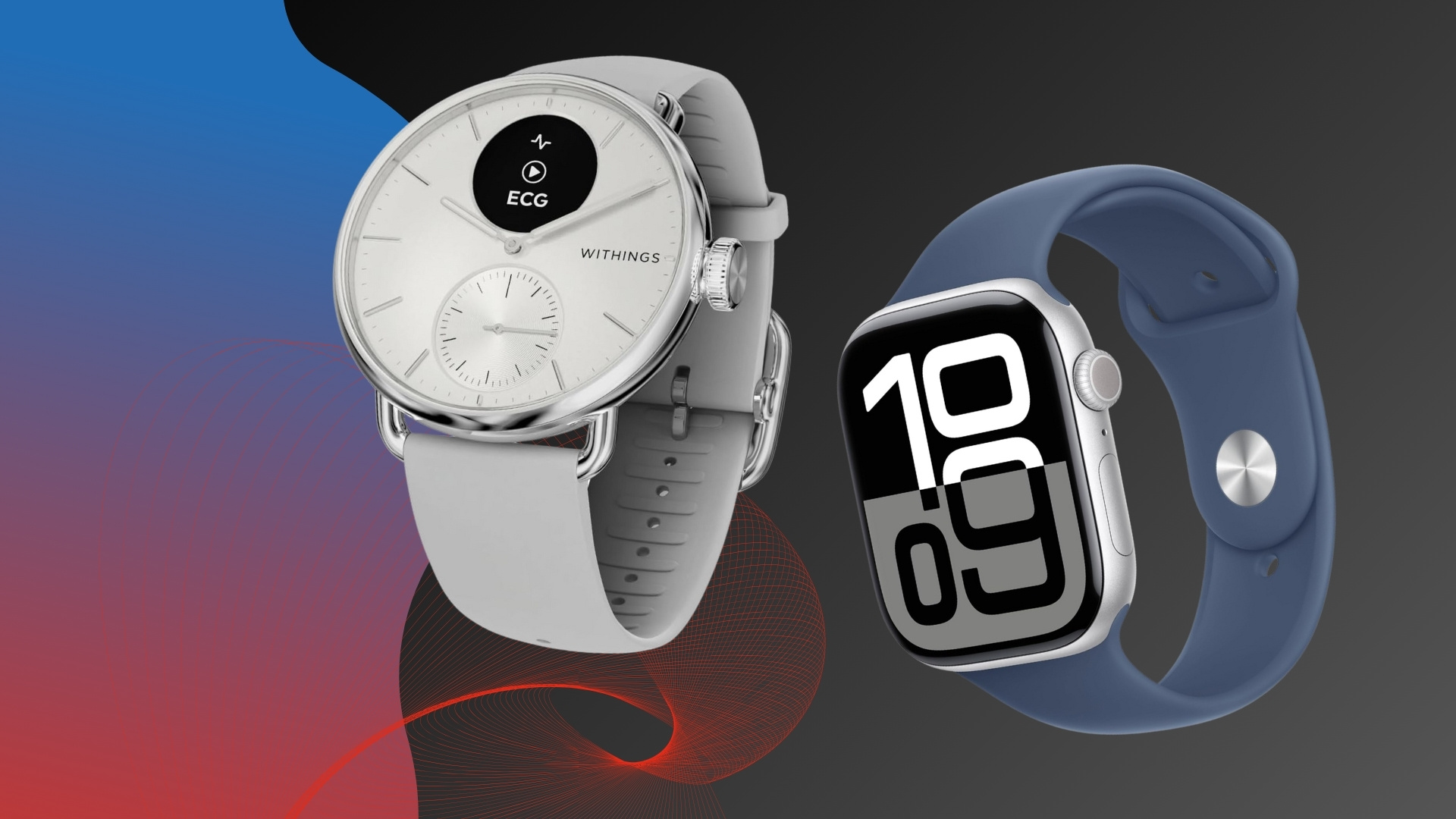
Although smartwatches have been around for ages, we’ve seen the industry emerge from being something of a niche product for a handful of smartphone users into a device for the masses, one that can do a bit of everything. Annualised updates are now standard too, but with all the choice now available, it can be tough to know which ones are worth buying – that’s exactly where this guide comes in, pairing you with the best smartwatch for your needs.
Compared to how it used to be right back at the inception of this market, it is now possible to get a great smartwatch for a reasonable price too. In fact, if you want to shop exclusively within a more affordable bracket then we do have an entirely separate guide that focuses on the best cheap smartwatches, ready for your perusal.
Going back to the wider market at hand, it’s quite impressive to see how manufacturers have adapted to cater to all use cases. If you want an app-filled ecosystem on your wrist that can, in a lot of scenarios, replace your smartphone – you’ve got it. If you’d rather lock into a fitness routine and use AI to help you train for a marathon – you’ve got that too. There is no shortage of options available, and our team knows as much through their involved testing process.
Every smartwatch that turns up at our offices, regardless of price, is subjected to the same series of tests to see how well they perform across the board. These watches are worn by one of our tech experts for at least a week, wherein we document the user experience, battery drain and any other aspects we deem noteworthy to potential buyers. All of this information means that you can shop with confidence because any wearable featured on this list has passed those tests with flying colours.
Just be aware that ecosystems can play a big role in which smartwatches are available to you. Apple Watches will only connect with iPhones, while Wear OS watches have a similar degree of exclusivity but for Android, but anything toting a different operating system will usually work with all phones. Keep on reading to see which smartwatches we currently rave about, or check out our separate guides to the best running watches or the best fitness trackers for something different.
Best Smartwatches at a glance
SQUIRREL_ANCHOR_LIST
Learn more about how we test smartwatches
Every smartwatch we test is used by the reviewer for at least a week, or longer if the battery life lasts beyond that point or we need more time to trial its features.
During testing, we will check it for key metrics, including app support, usability and battery life. If the device offers fitness, location or health tracking features, we will also test these for accuracy and reliability.
For distance tracking, we record how accurately the device recorded runs on tracks we know the length of. We also record how much battery is lost using things like in-built or connected GPS per hour. To check heart rate accuracy, we compared the results recorded on the wearable to those of a dedicated HRM strap.
After recording the data, we then pair it with our general experience using the wearable day-to-day, letting you know if it’s comfortable to wear or if we encountered unexpected bugs during use over the review period.
-
The new Galaxy Watch Ultra-inspired design
-
An actually useful smart assistant
-
Welcome user interface changes
-
The promised battery life improvement is disappointing
-
Some health features still tied to Samsung smartphones
-
Some might not be sold on new design
Even though it’s far from a major overhaul on what came before, the Samsung Galaxy Watch 8 is still a great smartwatch that shows just how far Samsung’s wearable range has come, to the point where it’s an easy one to recommend to practically any Android user looking to have a great smartwatch that ticks all of the right boxes.
The only obvious change over the Galaxy Watch 7 is the move to have a more square-like design that mirrors the Galaxy Watch Ultra. The new look might not be to everyone’s tastes but we’re big fans of it, especially as it gives the Watch 8 a bit of visual flare to standout against the competition.
The big change on the software front (aside from having Wear OS 6 right out of the box) is the removal of Google Assistant in favour of Google Gemini. Given all that Gemini can do compared to Google’s digital assistant of old, having access to the new AI platform on your wrist is a big win, as you can have long-running, contextual conversations on the go. It easily puts Siri and the Apple Watch to shame.
Always working in the Galaxy Watch’s favour is the fact that Samsung has one of the best library of watch faces on the market, arguably being right up there with Apple’s offering. There are tons of fun, colourful watch faces alongside more practical, analogue-inspired styles with two moving hands, so you’re bound to find something that suits your fashion sense.
As has been the case for a while now, the Galaxy Watch is also a great option when it comes to fitness tracking. Much like with Apple and Garmin, almost every workout you can think of is here, and we found the heart rate data to be largely spot on. Sleep tracking is also quite robust, and Samsung’s software does a better job than most when it comes to communicating what might have contributed to a bad night’s sleep and what you can do to fix it going forward.
-
Best battery life of any Wear OS smartwatch
-
Impressive durability given its sleek look
-
Top-notch health and fitness tracking capabilities
-
Only available in one size
-
Wellness score can be hit-and-miss
For the longest time, labelling any Wear OS toting smartwatch as being the best in its category came with the implicit understanding that, as good as it might be, it still couldn’t quite match the prowess of the latest Apple Watch. With the OnePlus Watch 3 however, you now have a wearable that absolutely runs rings around the Apple Watch Series 10 in a few key areas.
The biggest boon of the OnePlus Watch 3, and arguably the key reason why it’s in this spot and not other Wear OS watches like the Samsung Galaxy Watch 7 or the Pixel Watch 3, is its battery life. When used as a fully featured Wear OS watch, you can get OnePlus’ wearable to run for up to five days on a single charge, which absolutely rids any sense of battery anxiety over a weekend, let alone over a single day.
However, the battery can be extended even further when you toggle the power-saving RTOS mode, which sees the longevity pushed to 16-days. What’s most impressive is that, unlike a lot of power-saving modes on other smartwatches, you still have access to a lot of main features here, including workout tracking, music control, ECG scans and more.
When it comes to health tracking, OnePlus has thrown in a ton of new sensors including one for your wrist temperature which is essential for more accurately tracking the menstrual cycle and ovulation. There’s also a 60-second Health Check-In which looks at seven unique indicators including vascular health, blood oxygen and heart rate, to get an overall look at your current bill of health, similar to the Body Composition scan on Samsung’s Galaxy watches.
There is a wellness app designed to give you an idea of how much energy your body has left in the tank, but we found the scores that it provides to be somewhat hit-and-miss, and at times completely off the mark from how we actually felt. Still, it’s a small blip in what is otherwise an excellent device that pushes the ceiling even higher for what’s possible from Wear OS.
-
Attractive and very comfortable design
-
Bigger display doesn’t feel huge on the wrist
-
Fun addition of mini-workouts
-
Not a radical upgrade on the Fit 4 Pro
-
Android users will enjoy stronger smartwatch support
-
Huawei Health app is still full of bloatware
While it’s more of a fitness tracker than a traditional smartwatch (although you can probably guess as much from the name), the Huawei Watch Fit 5 Pro is an outstanding wearable to buy in 2026. In spite of the features you sacrifice by not having access to a wider smart ecosystem in the way you would via an Apple Watch or Wear OS watch, there are plenty of pros to enjoy with this watch, starting with battery life.
With full charge, you can expect 10 days of use from the Watch 5 Fit Pro which blows practically every other smartwatch out of the water. Even with the always-on display toggled, you’re still looking at a four-day stint before needing to reach for the nearest charger, which outshines the two-day capacity of the Apple Watch Series 11. By extension, runners can enjoy 25 hours of GPS use so you have more than enough juice available here for tracking a marathon.
While easily outpacing flagship wearables on battery life, the Watch Fit 5 Pro has a lot of the same screen features as what you’d find on pricier watches. The large 1.92-inch panel is great for allowing workout data and app information to spread out, making it all easy to read on the go, but what really elevates the experience is the peak brightness of 3000 nits. That level of brightness makes everything shine, especially when you’re outdoors on a run.
In terms of the design, there’s no point in trying to disguise it – the whole thing looks like an Apple Watch. Huawei’s inspiration should be clear the moment you lay eyes on the Watch Fit 5 Pro but even so, it’s still a great-looking device and one that, even more importantly, sits very comfortably on the wrist. Part of that is owed to the woven strap that’s included which is durable yet breathable, so it never outstays its welcome during a workout.
Speaking of workouts, this is where the main appeal of this watch lies. In addition to the already excellent fitness tracking tech and software that Huawei is known for, you now have mini-workouts on the watch which are perfect for busy parents or professionals who struggle to find the time to exercise – even on more hectic days, these workouts give you the chance to step away from your desk and get in a quick stretch.
-
Great battery on AMOLED model
-
Strong core tracking experience
-
Improved navigation features
-
Big price jump from Fenix 7 Pro
-
New interface takes getting used to
-
Lacks LTE connectivity
Garmin watches have dominated this category for quite a while now, but with the Garmin Fenix 8, the company’s reign shows no signs of coming to an end. Simply put, unless you’re after a very specific feature like incredibly long battery life (wherein the Garmin Enduro 3 would make more sense), the Garmin Fenix 8 is the go-to option for serious athletes.
The watch builds upon Garmin’s outstanding fitness tracking capabilities with detailed heart rate, running and strength training metrics that make it an instant winner, regardless of what sport or workout you tend to favour, but it also adds a few new smart features into the mix.
The biggest addition is the option to have an AMOLED display on certain Fenix 8 models, making the watch feel more like a modern wearable against competing devices like the Apple Watch Ultra 2 and the Samsung Galaxy Watch Ultra.
There’s also a built-in mic for voice commands as well as taking voice notes on the go, which could be handy for reminding yourself about certain course hazards. For more immediate help on the track, the watch’s flashlight can ensure that any issues are spotted well in advance.
-
Lovely design
-
Performs well as a sleep tracker
-
Useful temperature variation data
-
Heart rate tracking accuracy during the day and exercise
-
Small screen isn’t great for phone notifications
-
Battery life with all monitoring features in use
It says a lot about a company’s confidence in a product when it doesn’t need to put out an update every year, and that’s exactly how things have transpired with the wearables of Withings. The original Withings ScanWatch was a fantastic hybrid smartwatch that hit the market back in 2020 and after three years, the company felt that the time was right to release a successor in the simply named Withings ScanWatch 2.
The core design is almost identical to that of its predecessor which, as far as we’re concerned, is great. The ScanWatch 2 uses traditional watch hands to tell the time, which means that it looks like an analogue timepiece from a distance, allowing it to pair incredibly well with smarter attire. Look a little closer however and you’ll see it’s smart trappings just below the surface.
Underneath the watch hands, there’s a 0.63-inch OLED display that’s used for displaying notifications, heart rate readings and more. So that you can get a good view of its dinky display, the ScanWatch 2 moves its hands away, forming a ‘v’ shape, before moving them back into place when you’re done reading.
On these merits alone, the Withings ScanWatch 2 is a great option for anyone who isn’t sold on the almost monolithic aesthetic that most smartwatches carry, and would rather have something that seamlessly blends style with substance, but there’s more to it than that.
The ScanWatch 2 is quite a competent health and fitness tracker, with one of its new features being temperature readings. This offers up a more detailed level of sleep tracking, and the Withings app does a great job of breaking down key information in a digestible form, all while offering actionable advice to go with it. Even though it’s quite pricey compared to most other smartwatches, the Withings ScanWatch 2 is still the ideal hybrid option in 2025.
-
Rotating bezel makes it easy to scroll
-
New software is a joy to use
-
In-depth sleep and health tracking
-
Screen is relatively small for a wearable of its size
-
Just over a day of battery life
-
Some flagship features exclusive to Samsung phones
-
You need to install three separate apps on your phone
The Galaxy Watch 8 Classic is Samsung’s most refined smartwatch yet, blending the bold squircle design first adopted by the Galaxy Watch Ultra with the much-loved rotating bezel that offers effortless navigation.
The 1.34-inch AMOLED display is super bright and crisp, though a little smaller than you might expect for the watch’s size. Performance is slick thanks to the new Exynos W1000 chip, and Wear OS 6 with One UI brings smarter notifications, Gemini voice assistant support and a host of customisable tiles.
Health and fitness tracking is a real highlight, with advanced features like body composition, ECG, sleep apnea detection and even antioxidant level tracking, though some of these are locked to Samsung phone users. The new Running Coach uses AI to tailor plans to your fitness level, and the automatic exercise detection is impressively accurate.
Battery life is the main drawback here. It lasts around 1.5 days with the always-on display, or two days with it disabled. Either way, that’s far behind what the likes of the OnePlus Watch 3 offer.
Still, if you’re in the Samsung ecosystem and want a stylish, feature-packed smartwatch, the Watch 8 Classic is the one to beat.
-
Exceptional battery life
-
Best of Garmin’s sport tracking
-
Better integration of solar charging
-
Just the one look and size
-
Doesn’t get new leak-proof buttons
-
Lacks new voice features on Fenix 8
With most smartwatches, you’ll be lucky if you can get up to two days of use at a time, which is why the Garmin Enduro 3’s claim of up to 90-days of battery life makes it an instant winner in this category.
Part of the reason why the Enduro 3 is able to reach these heights of longevity is down to its built-in solar panels for charging on the go. Those panels have even been made more efficient over the ones found in the Enduro 2, charging the device faster than ever before.
Because this is a Garmin watch, we wouldn’t necessarily recommend the Enduro 3 to those who simply want a fully-featured smartwatch that also happens to last a long time. To that end, Wear OS watches like the TicWatch Pro 5 and the OnePlus Watch 3 are better options, but from a fitness perspective, the Enduro 3 trumps them all.
Still, there are a handful of smart features on this device that do make it feel a bit more modern compared to older fitness trackers, namely the ability to listen to music and podcasts offline, contactless payments via Garmin Pay, and notifications from your phone. Plus, the Enduro 3 has the ability to work with both iPhone and Android handsets.
-
Most of that good Garmin sports tracking
-
Useful big screen for viewing maps
-
It’s really light to wear
-
Misses out on Garmin dual-band GPS and ECG
-
Square design isn’t all that eye-grabbing
-
Battery life in always-on display mode
As much as we love Garmin’s watches, especially as they regularly feature in our round-up for the best running watches you can buy, if there’s one criticism that can usually be levied against them it’s that they tend to look a little out of place against most other smartwatches. They’re not poorly designed by any means, but they tend not to have the same modern look as the competition – thankfully, this isn’t a problem with the Garmin Venu X1.
Taking on a square design that doesn’t feel too dissimilar to that of the Apple Watch Ultra 2, the Venu X1 feels like a far more modern timepiece than anything Garmin’s put out before. Plus, with a chassis that’s only 7.9mm thick, the watch sits flush on your wrist and is very unlikely to ever catch on your clothing.
With the newer design, Garmin has also implemented one of its best (and largest) displays, coming in with a whopping 2-inch AMOLED panel. By having more space than your average Garmin display, not to mention the more colourful AMOLED technology, the screen does a great job of conveying all your key workout metrics at a glance, and watch faces have more space to spread out which, in turn, makes smaller complications easier to read.
Even with the more compact frame however, you’re still getting the same great experience that Garmin watches are known for. You can track all sorts here from outdoor running to indoor pool swimming, and everything in between. The ability to listen to music offline also means you can leave your smartphone at home during a workout, whilst Garmin Pay has you covered for a cheeky post-run coffee.
Also a big first for the Venu series is the inclusion of a built-in torch, which was typically reserved for more expensive Garmin watches before the X1’s release. Easily accessible via long-pressing the bottom button, the torch can be very helpful if you’re running through your local park at night and require a bit more light to illuminate the path ahead. Similarly, if you ever take a wrong turn on a trail route then you can use the torch to signal for help.
-
Comfortable to wear and two strap options
-
Useful new training and racing modes
-
Plenty of smartwatch features and other sports modes
-
User interface is the same as other Huawei Watches
-
Some tracking inaccuracies
-
App is full of bloatware
In the world of running watches, the likes of Garmin, Coros and Polar and have long been go-to options for anyone who’s devoted to the activity. Many years back, Huawei did try its hand at a running-focused watch but before long it pivoted to packing its other watches with lots of fitness-first features. Well, it’s taken a long time for a successor to arrive but the Huawei Watch GT Runner 2 was absolutely worth the wait – showing how the brand was simply biding its time and learning from its competitors to make a running watch that counts.
The first thing you’ll no doubt notice about this watch is that it looks amazing. The watch launched with three colourways (a fourth, Racing Legend, was added afterwards) and each of them are eye-catching in their own way. The Dawn Orange variant in particular is very eye-catching against a sea of running watches that tend to draw from the same colour palette. Unlike a lot of watches, there’s just a single 43mm size available, but the watch is still lightweight enough that it feels like a solid one-size-fits-all compromise.
It also helped that the watch itself is very comfortable to wear. The nylon strap sits snugly against the wrist, but it’s very breathable too, so even if you are building up quite a sweat mid-workout, the GT Runner 2 won’t start to feel like it’s outstaying its welcome. Don’t be fooled by the colourful aesthetic though, the chassis features titanium in its build so the watch is designed to encounter plenty of knocks when you’re out on a run.
What really separates the watch from the crowd however, and is arguably the reason why you should consider the GT Runner 2 over a Garmin is the outstanding GPS tracking. Courtesy of the circular satellite antennae that wraps around the chassis, the GT Runner 2 is able to capture some of the best location data we’ve ever seen from a smartwatch. It does a great job of building an accurate look at where you’ve been on a route and which parts caused you the most difficulty.
As much as we love the running capabilities of this watch, it is unfortunately hampered by the same limitations that plague all Huawei watches. Running on the wearable version of HarmonyOS, the GT Runner 2 lacks all of the third-party support found on watchOS or Wear OS toting watches, and even falls behind the likes of Garmin, which still has offline Spotify support for playback without your phone.
-
Premium, durable materials and solid build quality
-
Super bright display
-
Fantastic diving and adventure features
-
Strong fitness and outdoor tracking
-
Size and weight will put some off
-
Smart ecosystem and app support not as good as rivals
-
The diving features are very niche
-
Expensive
As much as the likes of Apple and Google spend so much time refining the software experience of their latest smartwatches, oftentimes it can feel as though one of the core aspects of owning a timepiece, namely its ability to function as a fashion accessory, gets lost in the mix. If you’ve ever felt the same and wish that something would inject a bit of style back into the smartwatch game then the Huawei Watch Ultimate 2 is for you.
In every sense of the word, this is a premium smartwatch. It has a premium price tag of £799/$1057 but what you get in return for that rate is a watch that makes all of its competitors look like they’re playing at the amateur level. The casing uses zirconium-based liquid metal to deliver a stunning finish, and although the watch is available in two colourways, it’s the blue variant that stands out the most.
With the dashes of blue and white around the bezel as well as the included watch band, the Watch Ultimate 2 looks every bit as classy as a traditional timepiece, and it’s almost guaranteed that you’ll have people gazing at your wrist in awe of the whole thing. It is a fairly hefty device with a weight of 80.5g, but that heft just complements the feeling that this is a sturdy watch that’s meant to make its presence known.
All of the looks aren’t for show either as the Huawei Watch Ultimate 2 boasts 20ATM water resistance, which far exceeds the 5 or even 10ATM limit of most other smartwatches. What this translates to is a watch that’s ideal for diving – effectively being a direct competitor to the Apple Watch Ultra 3 is this area.
When you are underwater, the Watch Ultimate 2 can use sonar-style soundwaves to send preset messages to other wearers, helping you to maintain contact and let fellow divers know if you’ve run into an emergency. It all adds up to one impressive watch, and if it wasn’t for the limitations of HarmonyOS compared to the more robust app libraries featured on watchOS and Wear OS, then the Huawei Watch Ultimate 2 would score much higher.
-
Week-long battery and potentially longer
-
Useful gesture controls
-
Zippy overall performance
-
Design is a bit drab
-
Lacks serious health features like rivals
-
User interface isn’t as polished as WearOS competition
One of the biggest issues that smartwatches continue to deal with is lacklustre battery life. We have had a few instances, such as the OnePlus Watch 3, which have managed to raise the bar but for the most part, brands have yet to rise to the challenge and with a lot of options, you’re lucky if a watch can last for two days at a time. Thankfully, this is not the case with the Xiaomi Watch 5.
Arguably picking up the torch from OnePlus and running with it, Xiaomi has put together a watch that can last for up to six days at a time, and even with the always-on display toggled, you can still get roughly four days of use. What’s even more impressive, if you leave home for a week and forget to pack a charging cable, you can toggle the power saving mode and the watch will stretch to last for a total of 18 days, which is simply brilliant.
Even with a clear focus on battery life, Xiaomi hasn’t forgotten to ensure that the Watch 5 delivers on performance. The watch uses a dual-processor set-up, with the Snapdragon W5 Gen 1 and the BES2800 chipsets running the show under the hood, divvying up resources between them to better optimise the watch’s performance in the moment.
Zipping through menus and apps feels fast, and it’s very unlikely that you’ll encounter any issues with slowdown here. What takes the user experience just a bit further though is the inclusion of fairly solid gesture controls. Not too dissimilar to the double tap feature on Apple Watch, you can pinch your fingers or rub them together in order to interact with the Xiaomi Watch 5. This could have easily been a gimmick but in everyday use it actually works rather well.
What’s less exciting is the watch itself. Given that there are so many smartwatches now that have recognised the importance of being an eye-catching accessory, the Xiaomi Watch 5, in the looks department, feels like a device from another era. It’s definitely functional, but a bit boring, and we’d like to see Xiaomi make more of an effort here in a successor.
FAQs
This depends on what you want to do with it. If you want a brilliant smartwatch that can do everything from local music to reliable, in-depth wellness and fitness tracking you’ll likely have to spend over $400/£400. If you just want a basic wearable to count your steps and push incoming notifications from your phone there are plenty of good options that retail for less than $200/£200.
LTE is useful if you use your watch a lot while away from your phone. But for most people, it’s not an essential purchase. The majority of users will always have their phone nearby and smartwatches can easily tether to them and share their data.
Apple is the biggest smartwatch maker in the world, but there are plenty of other smartwatch platforms. Google develops a competing Wear OS platform that’s used by most mainstream watchmakers, including the Fossil Group and Samsung. Fitness companies, like Garmin and Polar, also develop their own proprietary smartwatch software.
This depends on the smartphone you use. Remember, Apple Watches are iOS-only, while Wear OS watches like the Samsung Galaxy Watch and Google Pixel Watches are exclusively Android – with some features being locked to certain handsets. Fitbit and Garmin work with both Android and iOS, but you’ll want to check the feature set compatibility before buying.
Again, this depends on the smartwatch. Most Apple and Wear OS watches traditionally only last a day or two. Fitbit, Garmin, Amazfit, and a few other brands can last more than a week. We test the battery durability in all our reviews, so do check those out if you’re interested in particular watches.
It depends on what you want to use your watch for. It’s essential if you want to track outdoor activities like running, cycling, hiking, etc without carrying your phone. With GPS, your watch can map your route, measure distance and calculate pace – all without your phone. However, if you always have your phone with you or you mostly work out indoors, you don’t need GPS.
We’d recommend measuring the size of your wrist. If you’re under 16cm, we’d recommend 38-42mm case sizes. If you’re over 16cm, 44-49mm case sizes would be better for you.
Fitness trackers focus on helping you track steps, heart rate, sleep and workouts. They traditionally last 5-7 days and give you basic phone notifications. Smartwatches do a lot more thanks to their larger touchscreens – they allow you to track your health stats, as well as allow you to install apps, reply to messages, take calls, listen to music, and much more.
Test Data
| Samsung Galaxy Watch 8 | OnePlus Watch 3 | Huawei Watch Fit 5 Pro | Garmin Fenix 8 | Withings ScanWatch 2 | Samsung Galaxy Watch 8 Classic | Garmin Enduro 3 | Garmin Venu X1 | Huawei Watch GT Runner 2 | Huawei Watch Ultimate 2 | Xiaomi Watch 5 |
|---|
Full Specs
| Samsung Galaxy Watch 8 Review | OnePlus Watch 3 Review | Huawei Watch Fit 5 Pro Review | Garmin Fenix 8 Review | Withings ScanWatch 2 Review | Samsung Galaxy Watch 8 Classic Review | Garmin Enduro 3 Review | Garmin Venu X1 Review | Huawei Watch GT Runner 2 Review | Huawei Watch Ultimate 2 Review | Xiaomi Watch 5 Review | |
|---|---|---|---|---|---|---|---|---|---|---|---|
| UK RRP | £319 | £319 | £249 | £949.99 | £319.95 | £449 | £769.99 | – | £349 | £899.99 | £269.99 |
| USA RRP | $349 | – | – | $999.99 | $349.95 | $499 | $899.99 | – | – | $1057 | – |
| EU RRP | – | – | – | €999.99 | €349.95 | – | – | – | – | – | – |
| CA RRP | – | – | – | CA$1479.99 | – | – | – | – | – | – | – |
| AUD RRP | – | – | – | AU$1699 | AU$599 | – | – | – | – | – | – |
| Manufacturer | Samsung | OnePlus | Huawei | Garmin | Withings | Samsung | Garmin | Garmin | Huawei | Huawei | Xiaomi |
| Screen Size | 1.47 inches | 1.5 inches | 1.92 inches | – | 0.63 inches | 1.34 inches | – | 2 inches | 1.5 inches | 1.5 inches | 1.54 inches |
| IP rating | IP68 | IP68 | IP68 | – | Not Disclosed | IP68 | Not Disclosed | Not Disclosed | IP68 | IP68 | IP68 |
| Waterproof | 5ATM | 5ATM | 5ATM | – | 5ATM | 5ATM | 10ATM | 5ATM | 5ATM | 20ATM | 5ATM |
| Battery | 435 mAh | 631 mAh | 471 mAh | – | – | 445 mAh | – | – | 539 mAh | 867 mAh | 930 mAh |
| Size (Dimensions) | 43.7 x 8.6 x 46 INCHES | 46.6 x 11.75 x 47.6 MM | 44.5 x 9.5 x 40.8 MM | x x INCHES | x x INCHES | 46.4 x 10.6 x 46 MM | x x INCHES | 46 x 7.9 x 41 MM | 43 x x 43 MM | 47.8 x 12.9 x 47.8 MM | 47 x 12.3 x 47 MM |
| Weight | 34 G | 81 G | 30 G | – | 52.6 G | 63.5 G | – | 37 G | 43.5 G | 80.5 G | 56 G |
| ASIN | B0F7QD4HSD | – | – | 50 | B0CG6PJLY3 | – | – | – | – | – | – |
| Operating System | OneUI 8 (Wear OS 6) | Wear OS 5/RTOS | – | – | – | Wear OS 6 | – | – | Harmony OS | HarmonyOS | Wear OS 6 |
| Release Date | 2025 | 2025 | 2026 | 2024 | 2023 | 2025 | 2024 | 2025 | 2026 | 2025 | 2026 |
| First Reviewed Date | 09/07/2025 | 18/02/2025 | 07/05/2026 | – | 05/03/2024 | 29/07/2025 | 15/10/2024 | 02/07/2025 | 26/02/2026 | 04/12/2025 | 09/06/2026 |
| Colours | Graphite, Silver | Black, Silver/Green | Orange, White, Black | – | Black, Pearl White, Sand, Blue | Black, White | – | Black | – | Black, Blue | Gray, Silver |
| GPS | Yes | Yes | Yes | – | – | Yes | Yes | Yes | Yes | Yes | Yes |