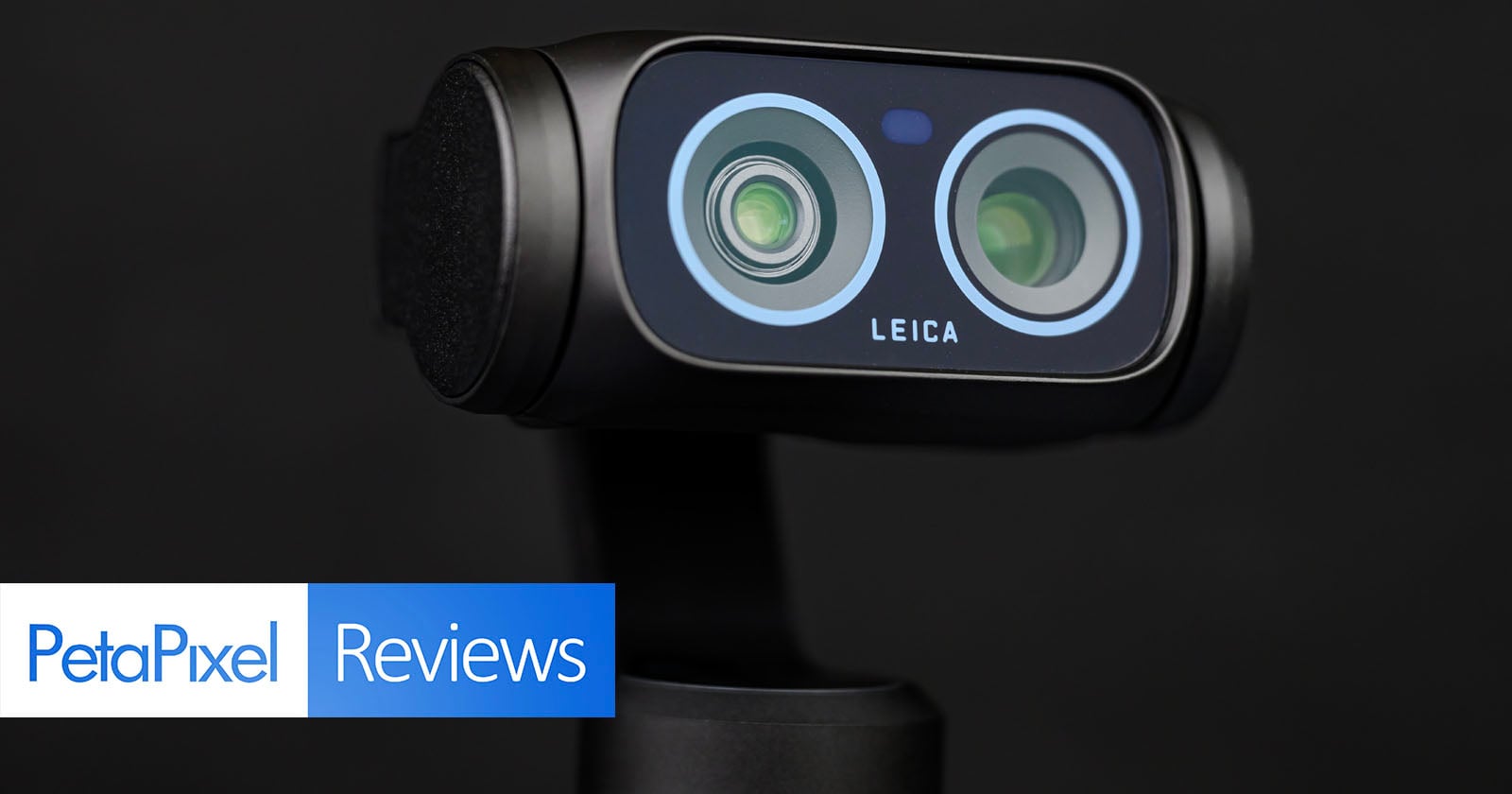
Few cameras can claim to have the impact of the DJI Osmo Pocket 3, which delivered a compact, affordable gimbal camera that proved enormously popular. So popular, in fact, that DJI’s closest rival Insta360 has decided to get in on the compact gimbal cam action with the new Insta360 Luna Ultra.
This is a handheld gimbal featuring two cameras, some clever innovations, and alleged intellectual property theft. It’s also Insta360’s first attempt at a camera like this, so let’s see how it performs.

This camera couldn’t have arrived at a better time for me, personally. One of my least favorite things to do is film myself, but Chris Niccolls, the PetaPixel YouTube channel host, is going to be away for a few upcoming episodes, so I’m going to have to suck it up and vlog. The Luna Ultra has a few features that might make that process more tolerable.
It’s also worth pointing out that DJI has a competing dual-camera gimbal, the Pocket 4P, launching soon, but while I have used that camera, there is still a review embargo in effect, so I can’t compare it to the Luna Ultra… yet. Stay tuned for a future shootout between these two lightweight heavyweights as soon as it is possible. But due to the media embargo, I will be referring to the single-lens DJI Pocket 4 for some performance comparisons.
Insta360 Luna Ultra Review: How It Shoots
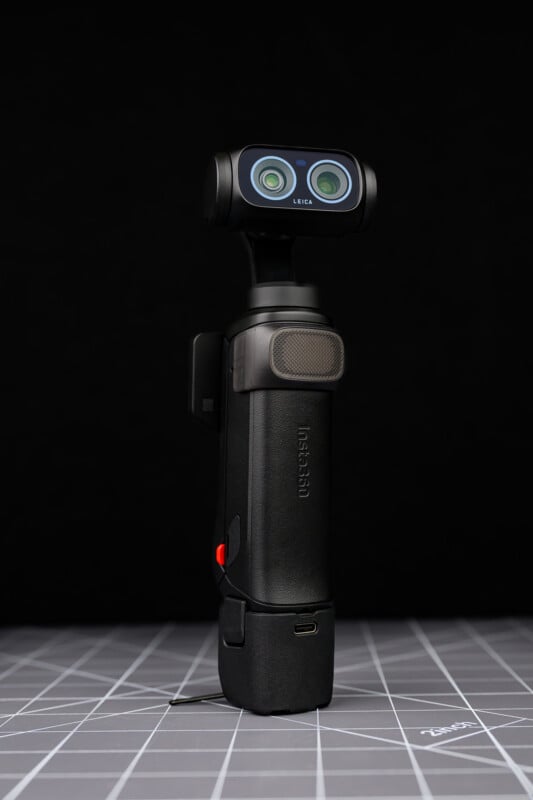
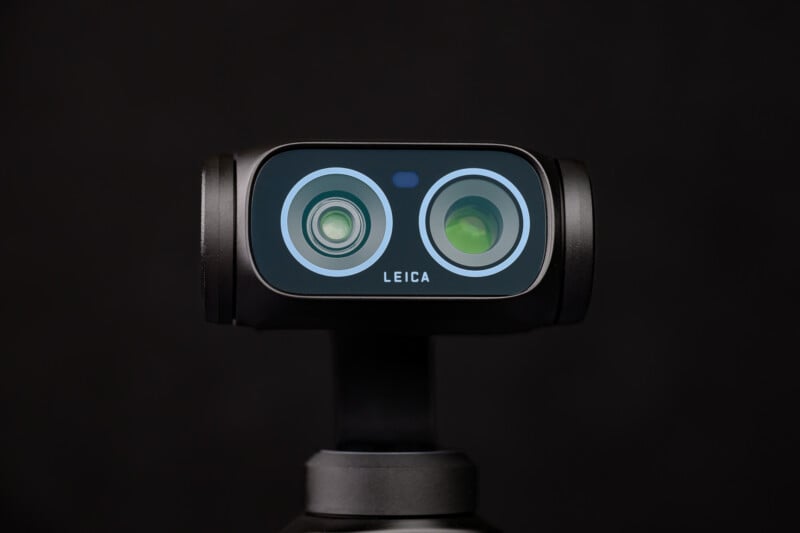
Alright, let’s talk about the cameras on this little guy. The main camera is a 20mm equivalent lens with an impressively bright f/1.8 aperture, which will give the same depth of field as a 20mm f/5 full frame lens: an ideal focal length for vlogging and tracking shots. Behind this lens is an 8K compatible Type 1 sensor, which allows for a digital 2x lens that delivers decent quality in 4K.
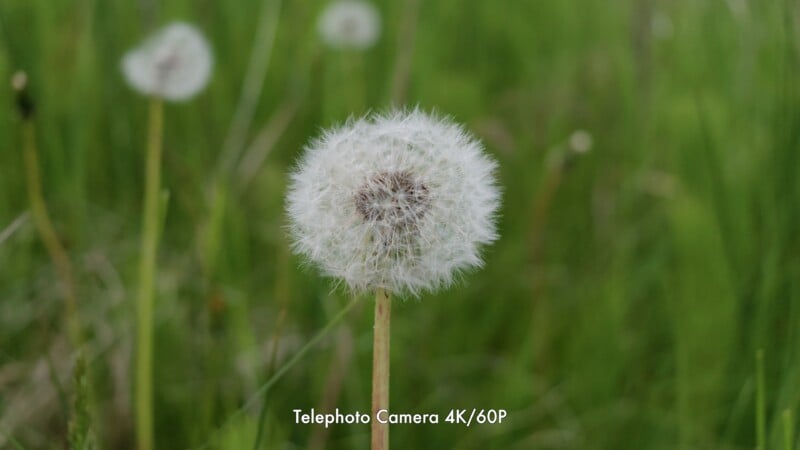
Alongside that main camera is the 60mm equivalent telephoto system. This collects a bit less light with its darker f/2 aperture and smaller Type 1/1.3 sensor. I was impressed to discover that, despite the lower specs, the telephoto camera is still capable of 8K recording. I’m a huge fan of these longer focal lengths on a gimbal, as it not only provides more reach, but makes camera movement look completely different than the wide-angle lens commonly associated with these handheld gimbal cameras. This second camera offers 6x and 12x digital lenses, but even the 6x starts looking a bit dodgy in 4K, so you can imagine how I feel about the 12x.
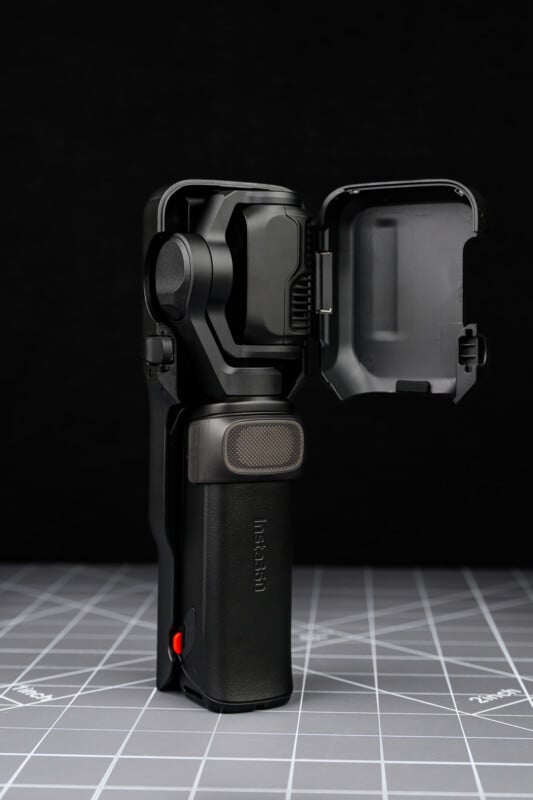
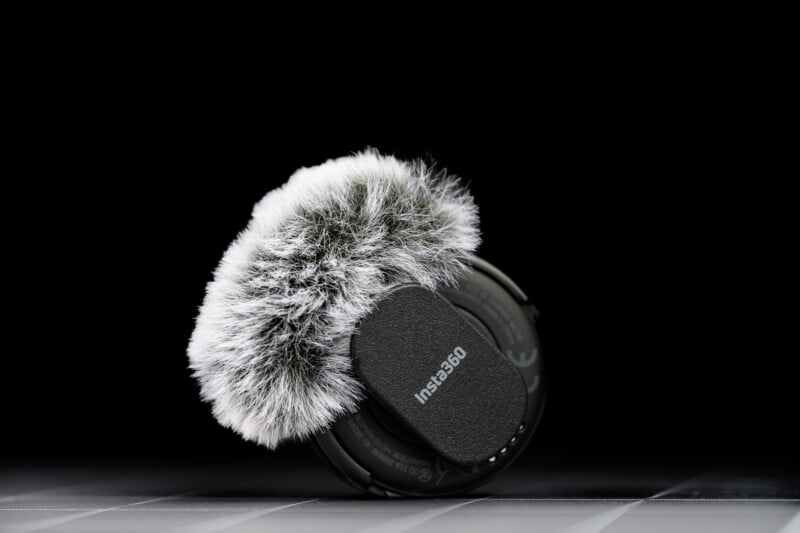
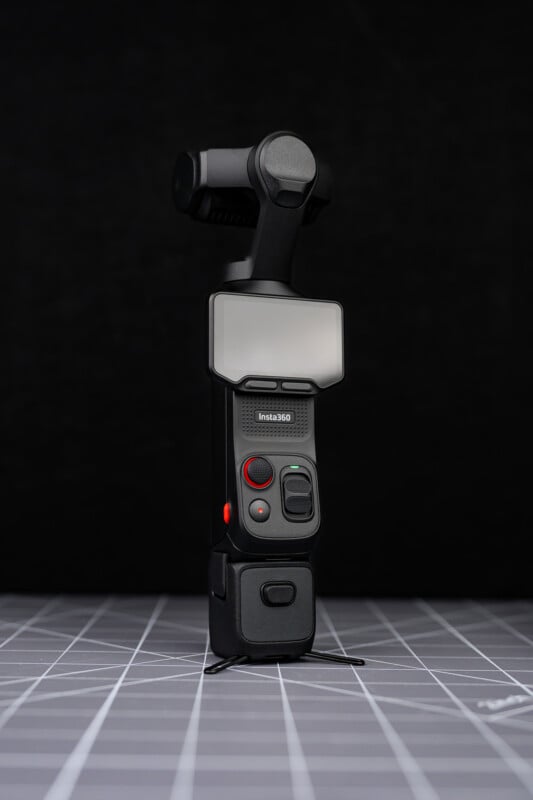
The headline feature of the Luna, in my opinion, is not the dual cameras but the detachable front plate. Not only does it contain the small two inch screen, but it also has an array of camera controls and a microphone. This allows me to remotely control the camera, with a view of the shot and record my voice while the camera sits unmanned.
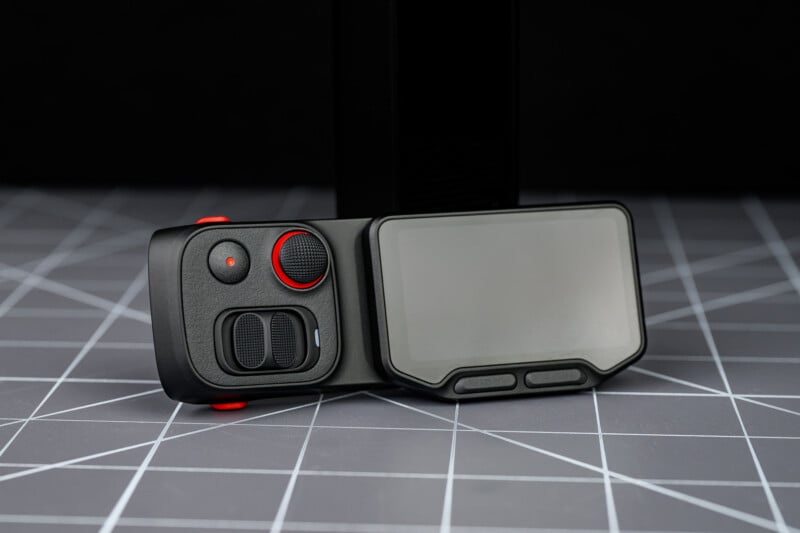
This is an awesome, incredibly useful capability when filming yourself. I do want to mention that this is a small screen with just over half a million dots (564 x 318 pixels), so confirming focus is difficult, but at least the screen is quite bright at 1,000 nits. Insta360 states that the range is 20 meteres, so there’s plenty of range to even capture a full body shot of yourself on the 3x lens.
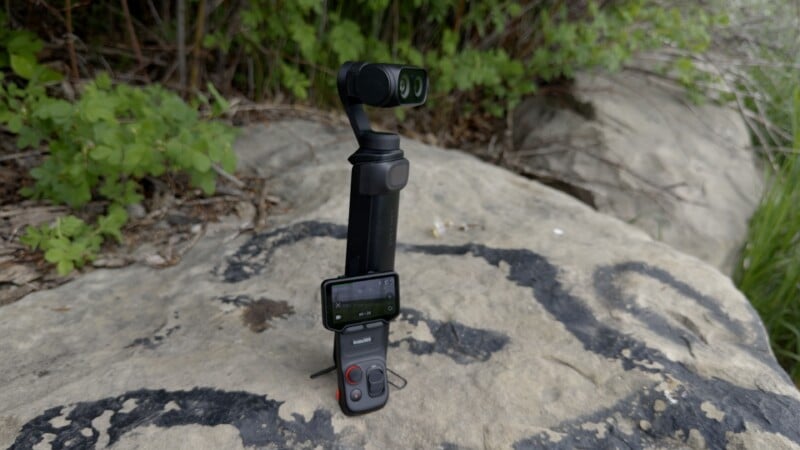
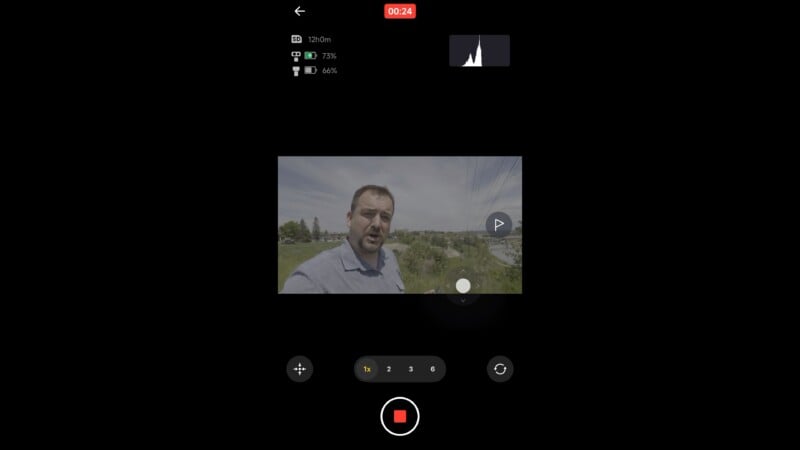
Like the DJI equivalents, using this screen to change settings can be quite fiddly. Setting focus and tracking subjects with the removable screen works quite well, but setting manual camera controls often leads to frustration. I found it useful for setting up shots initially to pair the Luna Ultra to the phone app, for a larger, more responsive display. As well, connecting to the phone app is the only way to see your histogram, which is almost essential to properly expose when shooting log video.

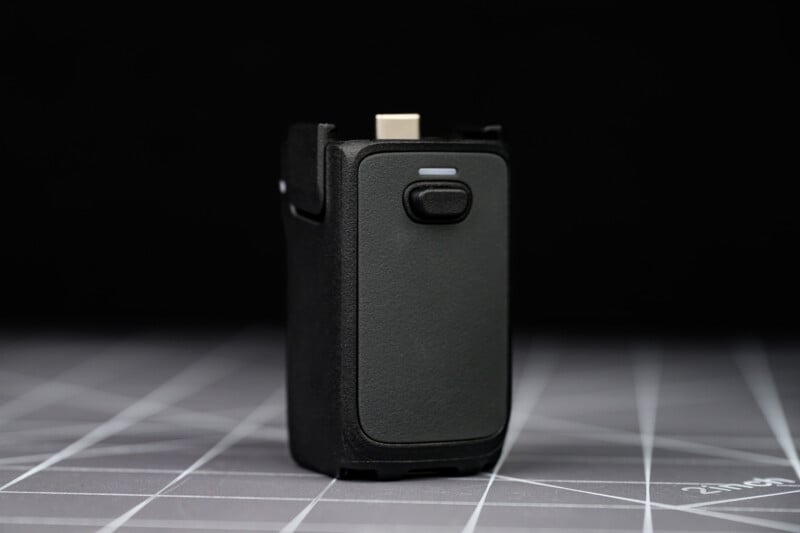
Like most compact gimbals, the Luna Ultra has an internal, non-user-removable battery. Insta360 says this can last as long as four hours, but in my testing with plenty of 8K and slow motion, I was able to achieve closer to two hours of shooting time. For more, you can power the camera through the USB-C port, and Insta360 makes an extended-life battery that can be attached to the base of the handle. There is also 47GB of built-in memory, which can be expanded with a microSD card.
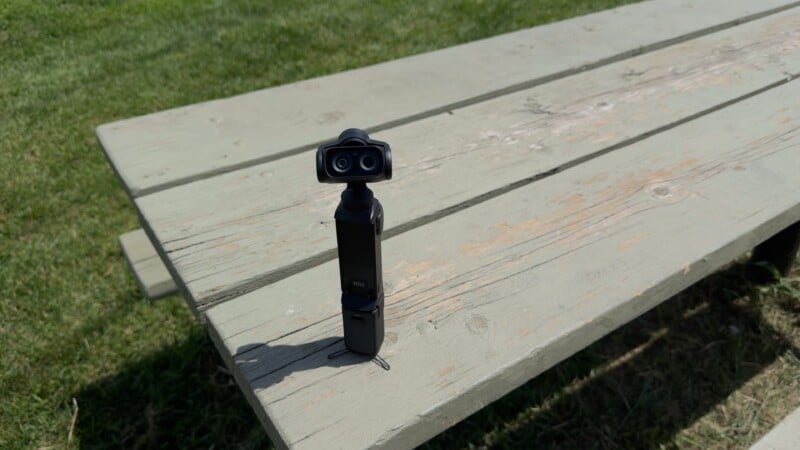
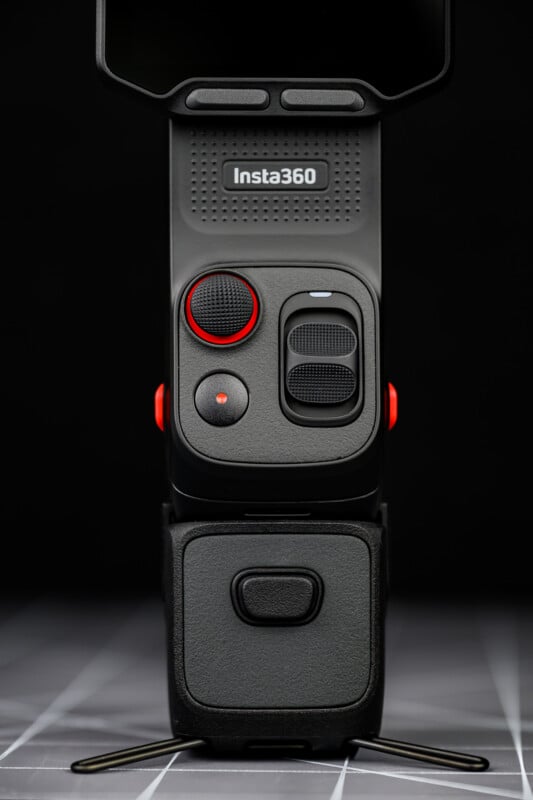
The gimbal is very effective at controlling everything but large vertical movements, and the tracking works well for keeping the subject in the frame and in focus. There is an optional accessory, the POV kit, which keeps the camera filming in the direction you are looking. It works quite well, but looks very dumb. You will have to take into account the social cost of lowering one’s head in public.
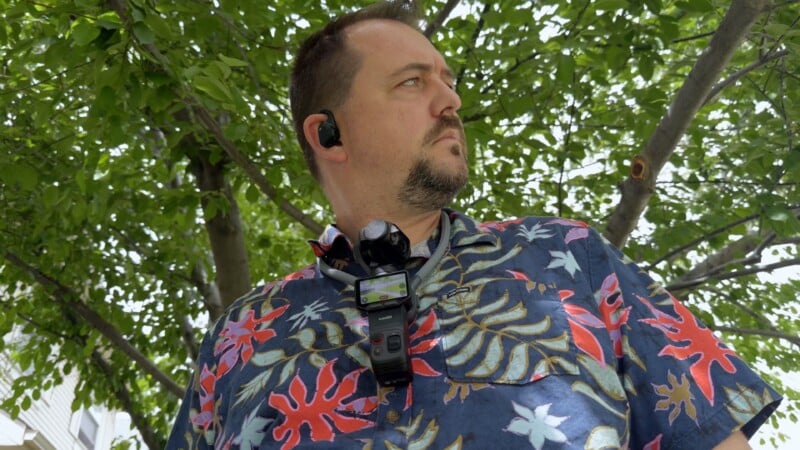
Both cameras can capture 8K up to 30p, with a variety of profiles, in Insta360’s I-Log or in HDR. 4K is also available from 24p up to 120p, which is impressive but not up to the level of 4Kp240 capabilities of the DJI Pocket 4. For extreme slow motion, 1080p video can be recorded up to 240 frames per second, though there is certainly a quality hit there. All these record modes use h.265 compression, which keeps file sizes down but can be quite demanding to edit on less powerful computers.

Insta360 Luna Ultra Review: Image Quality
Like many action cameras, the Luna Ultra has a dedicated low-light mode, confusingly called Pure Video. This mode limits you to 4K recording at up to 60 frames per second and no longer supports I-Log. This mode can be manually selected, or it will automatically engage when light levels drop. It certainly results in clean-looking low-light video, and when compared to my iPhone 17 Pro, the Luna Ultra easily trounced the tiny selfie camera, but also gave much sharper and less noisy video than the very good main front camera on the iPhone. If you plan to use the Luna Ultra in low-light venues like small concerts, it will do a great job.
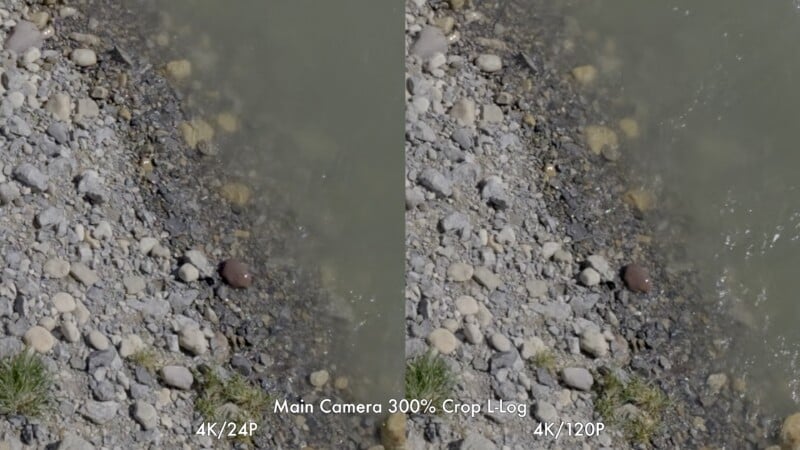
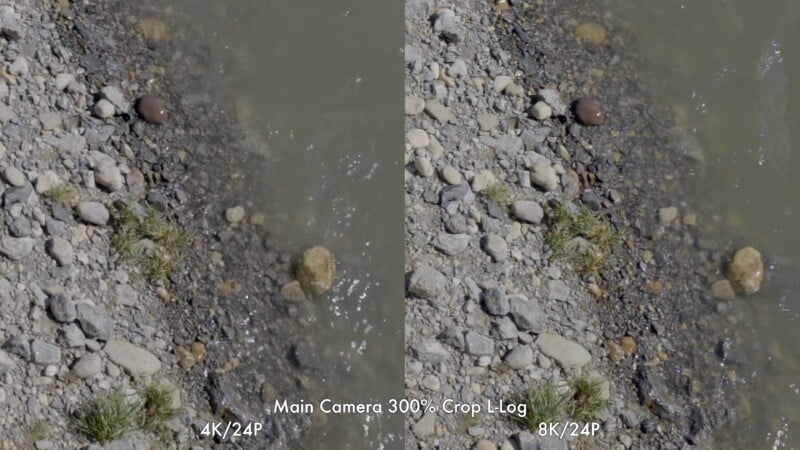
4K can be recorded up to 120p with audio still embedded. Typically, we see an image quality penalty when recording 4Kp120, but here you can see that detail levels are very similar at 24p all the way up to 120p. For an even more detailed image, 8K can be recorded up to 30p. The 8K image is a tiny bit sharper than the 4K recording, but not nearly to the level we see with larger sensor, 8K-capable cameras.
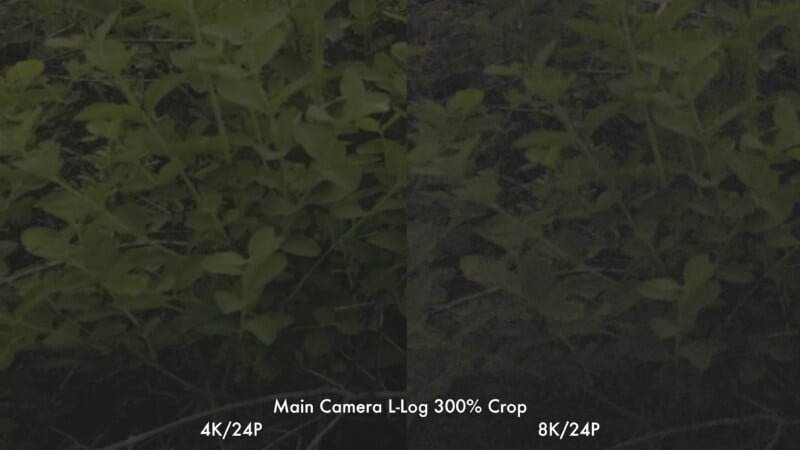
That might make you think it’s worthwhile to just shoot all your slower frame rate footage in 8K, but wait: let’s talk about dynamic range. This camera uses Leica’s I-Log profile to capture maximum dynamic range, and when utilizing that profile when capturing very high-contrast scenes, the 4K footage is dramatically less noisy than the 8K capture. So I would only recommend using the 8K capture in relatively low contrast scenes where maximum resolution is needed. Most of the time, stick to 4K.
In terms of the look of the footage, the Luna Ultra is definitely a step over most smartphones, with less of the over-sharpening and compression issues that can plague mobile video.
As well, remember that when filming yourself with a smartphone, you are typically using the selfie camera, which is a massive step down from your main front camera, and even more so the large Luna Ultra main camera. While there are options to use the main camera — such as a mirror or external monitor — that adds cost, complication, and you’re at the mercy of regional availability.
One thing to mention: the review video embedded above does have quite a jerky-looking motion cadence to the footage because it’s being shot at faster-than-normal shutter speeds as none of the kits include ND filters. If you want truly smooth motion which emphasizes the capabilities of this gimbal, you should definitely invest in the ND kit when it becomes available.
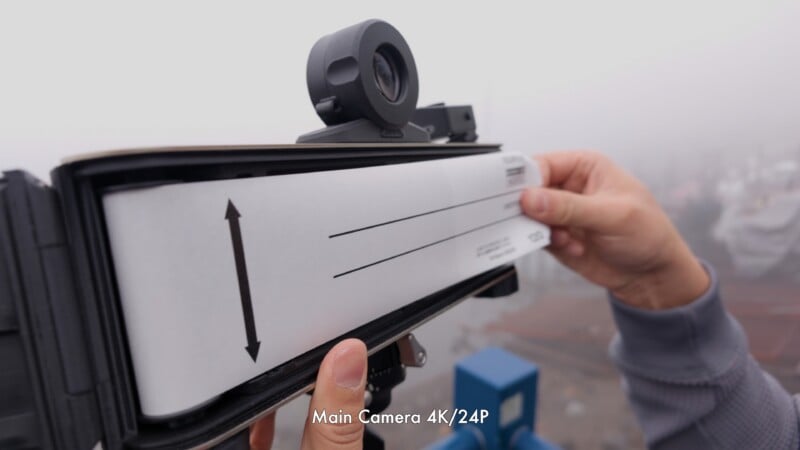
While out shooting on a sunny Alberta day, I found both the gimbal handle and removable screen to get quite hot. I never encountered overheating or even saw a warning while testing the camera in the field, but I wanted to run some controlled tests. Indoors at room temperature, I ran the camera unplugged from power using the internal battery with a microSD card. All tests were performed with the main camera.
4Kp24 could be recorded for two hours and forty-seven minutes before the battery died, but I still did not overheat or give an overheating warning. I would say for things like live events and sit-down interviews, overheating in 4K at standard frame rates will not be an issue.
4Kp120 ran for almost 44 minutes before overheating. This mode will primarily be used for short bursts of slow motion, so I find this result absolutely acceptable.
8Kp24 ran for 49 minutes before overheating. I really like to use 8K to capture a single wide frame for interviews that I can crop in on for different angles, and the camera thermals could potentially limit this use case.
The Insta360 Luna Ultra Gives DJI Real Competition
As mentioned at the start of this review, I generally can’t stand filming myself. But something happened while recording the review video above: I may have been frustrated with myself, but never the camera.
Being able to let the Luna Ultra track my movements and keep me in frame, while monitoring its decision-making with the removable front plate, was a true pleasure. I know that smartphone apps can offer similar functionality to other cameras, but I’ve always found that process to be unreliable and cumbersome. With the Luna Ultra, everything just worked, delivering superior image quality to a smartphone and that alone would be enough for me to take this device along with me all the time.
Are There Alternatives?
The DJI Pocket 4K (single lens camera) has more impressive slow motion capabilities but is limited to a single focal length. The forthcoming DJI Pocket 4P is a direct competitor, but we have not yet had the opportunity to review it. Most importantly for American readers, neither version of DJI’s competing products will be available in the USA for the time being. So that makes this a very simple choice.
There are the Xtra Muse 2 and Muse 2 Pro, which have been teased but not officially announced at the time of publication. These are, effectively, DJI’s Osmo Pocket 4 and 4P in disguise, which means they are viable alternatives if you are okay going with gimbal cameras that give off strong “we have DJI at home” energy.
Should You Buy It?
Yes. The Insta360 Ultra Luna is convenient, powerful, and capable. It is the best vlogging camera I have ever used. Anyone interested in vlogging should take one out for a spin.
Correction 6/18: The Luna Ultra records log video with the Insta360 I-Log profile, not Leica’s L-Log. We apologize for the mistake.